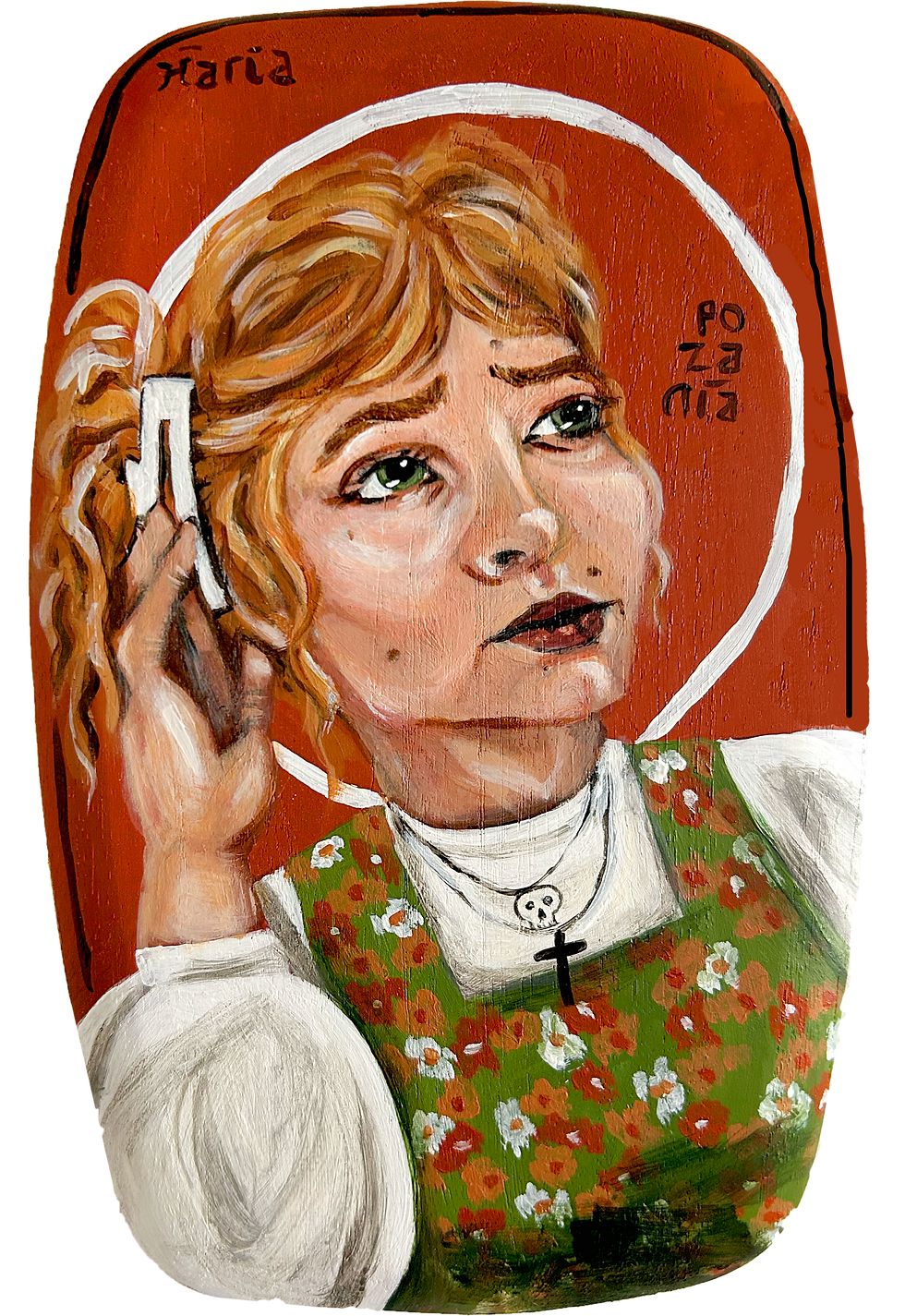
St. Rosalia
of Palermo
Born: 1130
Died: 1166
FEast: July 14th
Patron of:
Palermo, pandemics, ecological studies
Bio
A descendant of King Charlegmane, Rosalia’s family was Norman, but ruling in Sicily as nobles under King Roger II. Her mother was named Quisquina, and her father was Duke Sinibald, Lord of Roses. She lived in the palace and may have one day been promised to marry a Count that had won favor with the king. Rosalia did not wish to marry him, however, and showed up with all of her hair cut off, pleading to instead become a nun. While she was able to join an order of Basilian nuns, her family, the nobility, and the Count continued to beg her to change her mind, so she decided to instead run off to a cave on Mount Pellegrino, led by 2 angels, where she lived a life of solitude and prayer until she died. She was likely younger than 13 when she first ran away, and only about 30 when she died.
In 1624, when a plague was raging through Palermo, Rosalia appeared in a vision to an infected woman, and then again to a hunter, to whom she revealed who she was and where her bones were, asking him to carry them through the city in a procession to bury them. He found the cave and an inscription she carved, reading, "I, Rosalia, daughter of Sinibald, Lord of [Monte] delle Rose, and Quisquina, have taken the resolution to live in this cave for the love of my Lord, Jesus Christ."Trapped in quarantine after months of the disease killing thousands, the citizens of Palermo were willing to listen to this message from Rosalia, and processed with her remains through the city three times. The plague immediately stopped its spread.
Rosalia was honored with art and statues all over the city, including paintings by famous Flemish painter Anthony van Dyck, who was trapped in the city during the quarantine. A church was also built on the site of the discovery of her remains. In a fountain on this site, George Evelyn Hutchinson, a renowned British ecologist, developed important ideas from observations of aquatic insects in the water. He was also inspired by her story, and proposed she become patron saint of ecological studies. Because of her aid in ending the plague, she is also known as a patron of pandemics, and was especially invoked during 2020 during the COVID-19 pandemic.
On Rosalia’s feast day, Palermo celebrates with a parade of her statue through the streets, surrounded by laughter, dancing, music, and a fireworks show. On September 4th, she is also honored by pilgrims walking barefoot up Mount Pellegrino. She is usually celebrated by Italian American communities on this day in the United States since her July feast day is often set aside to celebrate Our Lady of Mount Carmel instead. In Palermo, she is often called “la Santuzza”, meaning, “The little saint”. There is also a Hindu Tamil community originally from Sri Lanka that lives in Palermo, and they have become devoted to her as well.
.
wHAT wOULD they CARE ABOUT TODAY?
Palazzo Butera Palermo
Prayer
Shown so often holding your own bones and having lived such a short, seemingly small and inconsequential life; and forgotten until so many years after your death, you are now a hero of your home city. Remind us that the good we do, the choices we make, and the legacies we leave echo for years down through to the future. May we inspire others in many years, too.
Amen.
Art Reflection
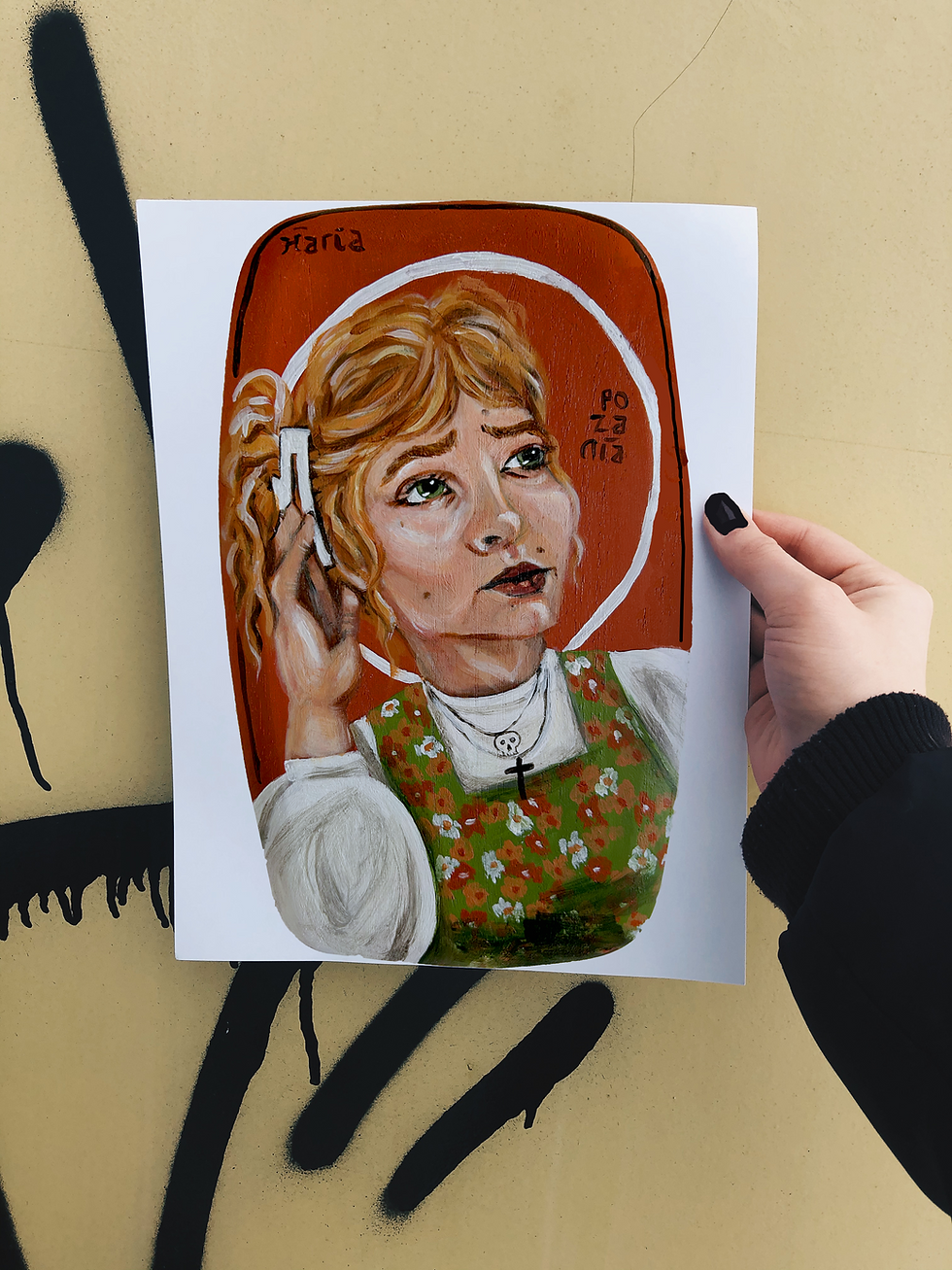
Rosalia is depicted in many traditional images lying on the ground and looking up with a hand beneath her head. Because this posture is so iconic, I decided to keep this the same for her. The colors come from images I collected of Palermo and the surrounding nature. I read that her family was Norman, so rather than having traditionally Italian features, she has light, strawberry blonde hair; which is also in keeping with the stories I read from those whom she has appeared to. She wears a skull necklace since she is also often pictured with her own bones, since they are what allowed her to be disovered and remembered. Lastly, she has a floral printed dress because she is also always depicted with flowers.